2016年3月28日星期一

Cassava flour production plant

Cassava flour production plant production process: 
Cassava root -- peeling -- washing -- grating -- pressing  -- Sifting -- Drying -- Milling -- packing -- Storing.

Cassava flour production plant introduce
To produce high qualtiy cassava flour, the fresh cassava roots harvested 10-12 months after planting. The fresh roots must be healthy without rot and well handled from farm. The roots should be processed within 24 hours after harvesting.   
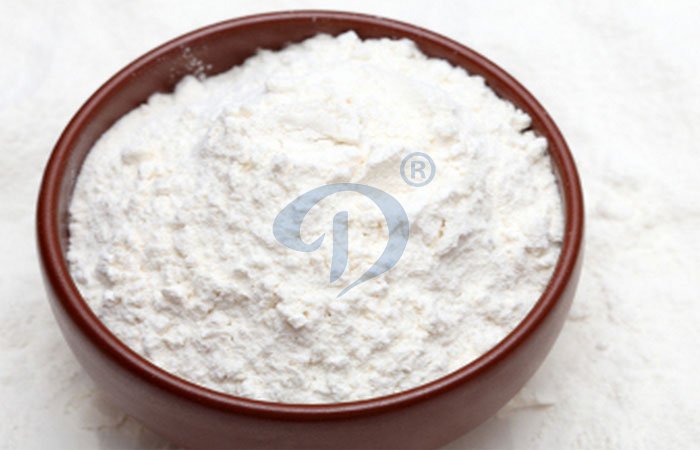
Cassava flour

Peeling:  Peel with clean stainless steel knives and remove woody tips. Ensure that the rind is  completely removed  to ensure low fiber  and  white color  of the finished product.  Avoid excessive waste of roots during peeling. 

Mechanical peelers are available in medium to large scale processing. 

Washing: Wash peeled roots thoroughly in clean water to remove pieces of peel, sand and other dirts. Pieces of clean cloth and used sack can also be used to facilitate washing.  

Grating:  Grate roots properly in clean stainless steel grater to obtain uniformly smooth mash.  The grated mash must be uniformly smooth without lumps. In case of non-uniform mash, grate again until smooth mash is obtained. The smoothness of the mash determines the quality, yield and market value of the finished cassava flour. 

Pressing: The mash  is loaded  into  sacks  and  pressed to remove as much moisture as possible. Pressing is completed when water is no longer dripping from the sacks. Complete dewatering facilitates drying. Pressing should be done immediately after grating to avoid the onset of fermentation. The pressing time depends on the efficiency of the press and moisture content of the mash. 

Sifting or Sieving: Cake breaking is done using clean hands followed by sifting with non-rusting sifter into clean basin. It can also be done by placing the pressed cake back into the grater and disintegrate for drying. Sifter made of stainless steel material is preferable.  

Drying: Dry the disintegrated/sifted cake in a dryer to reduce moisture level to acceptable level according to national regulatory standards. Sun drying, use of mechanical or solar dryer can be employed to reduce the moisture.  
Milling: Milling is done to obtain fine textured flour using hammer mill or disc attrition mill. 
Packaging : Pack desired quantities of cassava flour in polythene bags and/or sacks, seal or stitch as appropriate. This avoids absorption of moisture of the flour from the environment. 

Storing:  Store in a cool, dry, well ventilated, insect and rodent free store/enclosure. Storing in this way, the cassava flour can be stored for at least eight months. 


If you have any questions,you can visit :www.starchprojectsolution.com
please feel free to contact us .Contact:Ms Elina
Phone: +86-371-5677 1822
TEL: +86 155 155 38695
Skype:elina881130
Email:sales@doinggroup.comsales@doinggroup.com

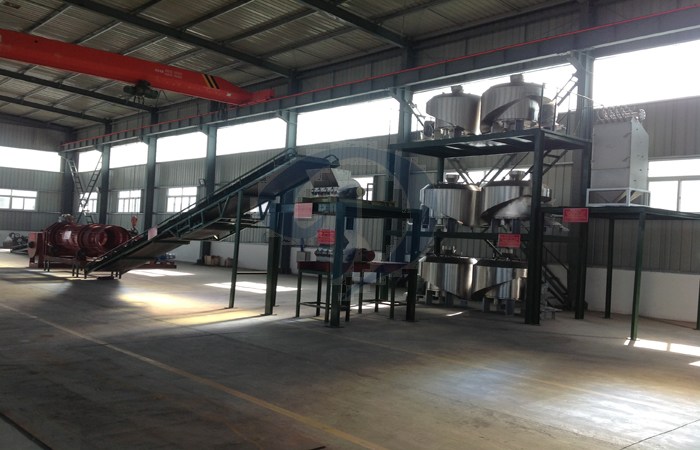
Cassava flour making plant

To make cassava flour, the roots are dried and ground to fine powder. Cassava flour is not be mistaken with tapioca flour. Both types of flours are made from cassava, but tapioca flour is made from cassava starch while cassava flour is made from the cassava root.The cassava flour making plant is also a little different with tapioca flour making plant.
Cassava flour making plant
About the Nutrition of Cassava Flour
The flour is high in calories. 100 grams of cassava flour provide about 340 calories and is slightly higher than the amount that wheat flour provides (333 calories). The flour is quite low in fat, with about 1.6 gram per 100 grams. It is rich in carbohydrates (80g/100g) and in fiber (12g/100g). Dietary fiber promotes digestion and can balance cholesterol levels. Cassava flour provides less protein than wheat flour, 1.6g/100 g compared to 13 g/100 g, but is an excellent gluten-free alternative for people suffering from celiac disease.

How to Make Cassava Flour?
After harvesting mature cassava roots, the roots are peeled and washed. They are then grated and dehydrated with a screw or hydraulic press. They are then often dried before being finely milled and packaged.  For this process, the most common equipment is a grater, press, dryer, miller and packaging machine. Drying is one of the major factors during the making of cassava flour. There are several ways to dry cassava roots or grated cassava. Natural drying is done by exposing cassava roots or chips to sunlight which is cheap, but also risky as it exposes the cassava to pests and diseases. It is also a long process. Artificial drying is done by de-hydrating cassava with a controllable energy source. An example of artificial drying is the rotary dryer which consist of a drum-like chamber, similar to a tumble dry, which is fueled by energy and rotates the product to extract moisture.

The Cassava flour making plant:
Grater, press, dryer, miller,packaging machine etc.

If you have any questions,you can visit www.cassavaprocessingmachine.com
please feel free to contact us .Contact:Ms Elina
Phone: +86-371-5677 1822
TEL: +86 155 155 38695
Skype:elina881130
Email:sales@doinggroup.comsales@doinggroup.com
2016年3月13日星期日

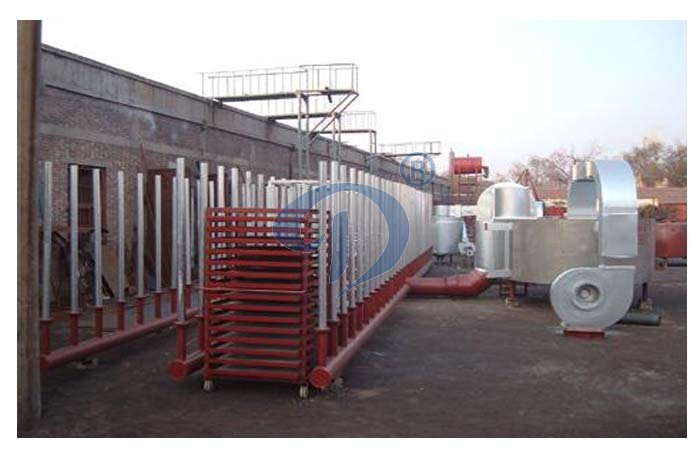
Vegetable drier


Description of vegetable drier:
According to the features of Chinese medicinal materias and flowers,we SIDA company deveoped the drying machines which is suitable for drying material such as massiveness,flake,strip etc.
Features of vegetable drier:
With different drying temperatures to ensure the property and quality of material
Automatic temperature control system
Low energy consumption
Easy and safe operation


Application of vegetable drier:
1.Vegerable drying
2.Flower drying
3.Chinese medicinal material drying

If you have any questions,you can visit :www.starchprojectsolution.com
please feel free to contact us .Contact:Ms Elina
Phone: +86-371-5677 1822
TEL: +86 155 155 38695
Skype:elina881130
Email:sales@doinggroup.com